

Every second, the world dumps a truckload of textiles into a landfill.
Yes, every second.
The fashion industry, known for setting trends, has also been setting records in overproduction and waste. According to the UNEP, fashion accounts for up to 10% of global carbon emissions and produces 92 million tonnes of textile waste annually. Fast fashion made clothing more accessible, but it also made waste a trend.
But what if the future of fashion wasn’t about making more, but making smarter?
Enter H&M, a brand once synonymous with mass-produced fast fashion, now turning heads for a different reason: its use of data analytics to reduce overproduction. From AI-powered demand forecasting to real-time inventory insights, H&M is quietly rewriting the rulebook not just to boost profits, but to reduce waste and lead the charge toward a more sustainable industry.
In this blog, we unpack how H&M is leveraging technology to fight fashion’s most notorious problem and why it could change the industry forever.
H &M’s Data-Driven Transformation
H&M, once a poster child of fast fashion, is now taking bold steps toward becoming a more responsible and responsive brand. At the heart of this shift is its commitment to sustainability powered by data. The company has set clear goals, including becoming climate positive by 2040, using 100% recycled or sustainably sourced materials by 2030, and reducing waste across its value chain. But meeting these goals in a fast-paced landscape requires more than good intentions; it requires smart technology.
That’s where data analytics, AI, and machine learning come in.
H&M has integrated these technologies across its business, from product development to supply chain management. Using predictive analytics, the brand now forecasts demand more accurately, avoiding overproduction. AI-driven tools help identify which styles, colors, and sizes are likely to sell in specific regions, reducing inventory guesswork.
Machine learning models also optimize store-level stock by analyzing real-time sales data, weather patterns, search trends, and even local events. This agility allows H&M to respond to consumer preferences quickly, producing in smaller, smarter batches instead of flooding the market.
To accelerate innovation, H&M actively collaborates with tech partners and startups. Notable collaborations include working with Google Cloud’s Big Data analytics to predict trending search behavior, and investing in circular economy startups through the H&M Foundation and CO: LAB venture fund.
Through this data-first transformation, H&M isn’t just modernizing fashion operations; it's building a future where technology and sustainability walk hand in hand.
How H&M Uses Data Analytics to Predict Demand?
Predicting what customers will buy used to be a guessing game. Now, at H&M, it’s a science, powered by data. By tapping into both online and offline customer behavior, H&M tracks what people are browsing, clicking, saving, and buying. Every interaction from website scrolls to in-store purchases feeds into a central analytics system that helps the brand understand shifting preferences in real time.
Customer Behavior Tracking (Online & Offline)
-
Tracks browsing, wishlist, and purchase behavior across the app, website, and stores
-
Analyzes what customers click on, try, or abandon — to predict future interest
-
Uses loyalty programs and in-store sensors for richer offline data
Real-Time Sales Monitoring
-
Monitors live sales data across all stores globally
-
Identifies fast-moving and slow-moving products instantly
-
Enables agile decisions on restocking, discounts, or pulling back items
Regional Preferences & Microtrend Analysis
-
Breaks down demand by geography, season, and even neighborhood
-
Factors in local weather, festivals, and style preferences
-
Uses machine learning to spot and respond to microtrends before they peak
The Result: Smarter inventory planning, reduced overproduction, and higher customer satisfaction.
Inventory Optimization Through Analytics
H&M’s commitment to reducing overproduction doesn’t stop at predicting demand; it extends to how inventory is managed, moved, and replenished. With the help of real-time data and intelligent systems, the brand ensures the right products reach the right stores at the right time. Here’s how:
Dynamic Restocking Based on Local Demand: Instead of sending the same quantities to every store, H&M uses localized sales data to tailor restocking. If a certain dress is selling rapidly in Mumbai but not in Milan, the system shifts supply accordingly, improving sell-through rates and minimizing waste.
Real-Time Supply Chain Visibility: Inventory decisions are guided by a continuous stream of data from warehouses, store shelves, and online orders. This helps avoid overproduction and stockpiling by responding to actual market signals instead of relying on static forecasts.
Automated Replenishment Systems: AI-powered tools track stock levels and automatically trigger reorders based on sales velocity, local demand, and seasonal trends. This reduces human error and keeps shelves stocked without overloading inventory.
By optimizing inventory with precision, H&M strikes a balance between efficiency and sustainability, producing only what’s needed, where it’s needed.
Benefits of H&M’s Data-Driven Approach
By weaving data into every part of its fashion cycle, H&M isn’t just optimizing operations; it’s redefining what success looks like in retail. The shift to analytics-driven decision-making is delivering tangible results across sustainability, customer experience, and profitability.
Reduced Textile Waste & Unsold Inventory: Real-time demand forecasting and smarter inventory control mean fewer products are made unnecessarily. This reduces excess stock, minimizes markdowns, and prevents tons of clothing from ending up in landfills.
Improved Customer Satisfaction & Personalization: With better insight into local preferences, shopping behavior, and trending styles, H&M can tailor its offerings more precisely. Shoppers find what they want, when they want it, leading to higher satisfaction and brand loyalty.
Better Profitability Through Smarter Inventory: Avoiding overproduction and markdowns directly impacts the bottom line. By producing what’s likely to sell and responding quickly to actual demand, H&M reduces wasteful spending and improves sell-through rates.
In short, data isn’t just helping H&M make better fashion choices; it’s helping the brand build a smarter, more sustainable business model.
What This Means for the Future of Fashion?
H&M’s data-first strategy signals a larger shift in the fashion industry, one where speed, sustainability, and strategy are no longer at odds.
Will More Brands Follow Suit?
Absolutely. As consumer expectations evolve and environmental concerns grow, more brands are recognizing that overproduction isn't just a waste issue; it's a business risk. H&M is proving that data-driven fashion isn’t just viable, it’s essential. Other retailers, both fast fashion and luxury, are beginning to invest in similar tech-powered solutions.
Design, Logistics, and Marketing All Being Redefined
-
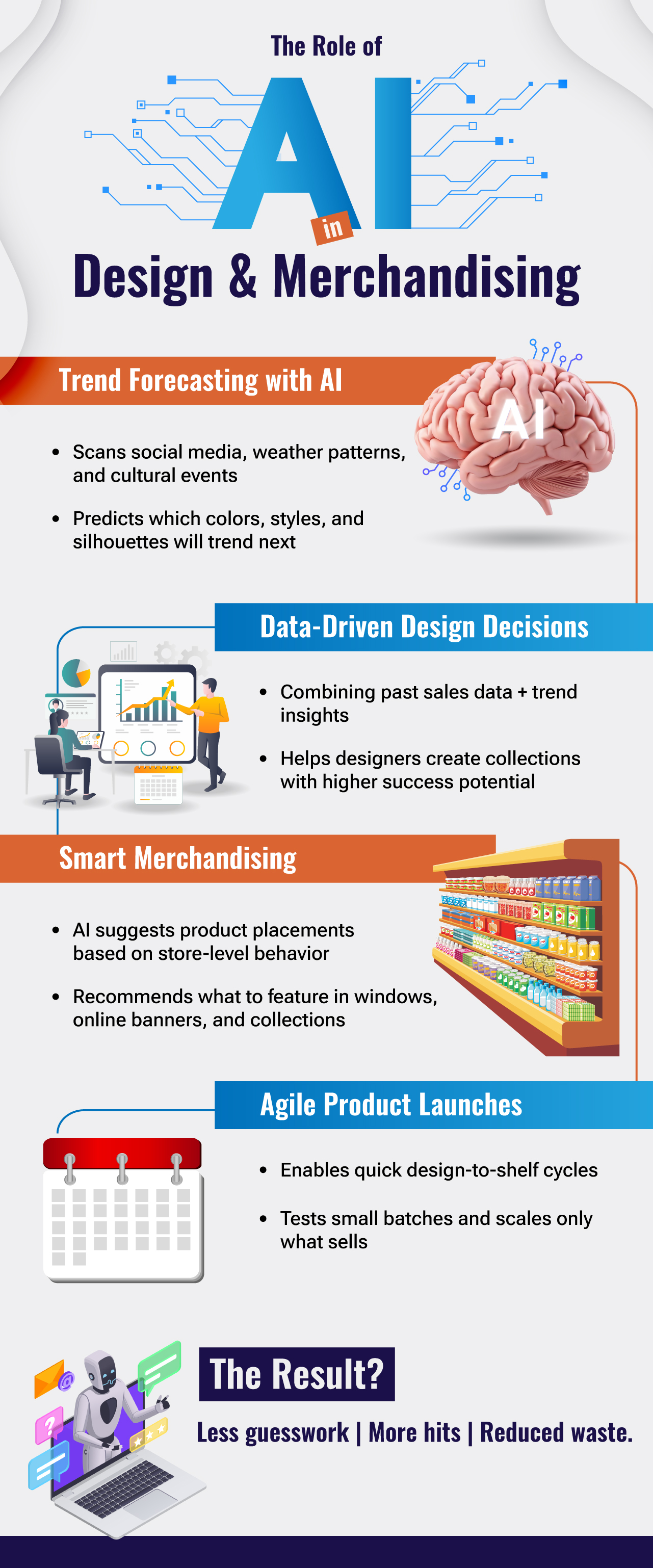
Designers now use AI to co-create collections with real-time trend data
-
Supply chains are becoming shorter, smarter, and more localized
-
Marketing is shifting from seasonal campaigns to data-informed microtargeting
The Rise of Agile, Ethical Fashion Powered by AI
We’re entering a new era where fashion brands can be fast and thoughtful, agile enough to respond to trends, but responsible enough to minimize impact. AI makes it possible to test small batches, track performance instantly, and scale only what customers truly want. The result? Less waste, more relevance, and a stronger connection with consumers.
The future of fashion won’t just be about what looks good; it will be about what’s smart, sustainable, and intentional.
The fashion industry has long been driven by speed and style, but now, it’s data that’s setting the pace. H&M’s transformation proves that technology isn’t just a backend upgrade; it’s a frontline solution to one of fashion’s biggest problems: overproduction. By using AI and analytics to align creativity with demand, H&M is showing that brands don’t have to choose between profit and purpose. They can deliver the right products to the right people, at the right time, and waste less in the process. As data becomes the new fabric of fashion, the question isn’t if others will follow, but how soon. Because in the future of fashion, sustainability won’t be a side note; it’ll be the strategy.
Less guesswork, less waste — more style, more sense.