

Let me tell you something that took me a long time to learn.
Not everyone in your team is playing the same game. Some people are doing their job. Some people are building the business. And the difference between these two groups will decide where your company ends up five years from now.
I call the second group "A players."
What makes someone a player?
A player is not defined by their title. They are not always the loudest person in the room. They might be your operations lead, your junior developer, or someone who just joined the team six months ago.
What makes them different is how they think.
A Players do not limit themselves to their job description. They do not think in terms of "that is not my department" or "that is above my pay grade." They look at the business as a whole. They see the bigger picture. When they spot a problem - even if it is outside their role - they flag it. Better yet, they come with a solution.
These are the people who sit in a meeting about marketing and ask a question about customer retention that nobody else thought to raise. They are the ones connecting dots that others do not even see.
The long game only works with players
Here is the thing about building a business. It is a long game. There are no shortcuts that hold up over time. Every quick fix, every hack, every temporary patch eventually comes back to bite you.
The only way to play the long game well is with people who are in it for the long game too.
Players are in it for the long game. They care about where the company is headed, not just what their next quarter looks like. They make decisions today that compound over the next two, three, or five years. They are not chasing promotions — they are building something.
When you have a team of players, something interesting happens. Conversations get better. Decisions get sharper. Problems get solved before they become crises. Because everyone is thinking about the business, not just their corner of it.
Why most companies get this wrong
Most businesses hire for skills and experience. Which makes sense on paper. But here is the problem - skills can be taught, experience can be gained, but the player mindset is something people either have or they do not.
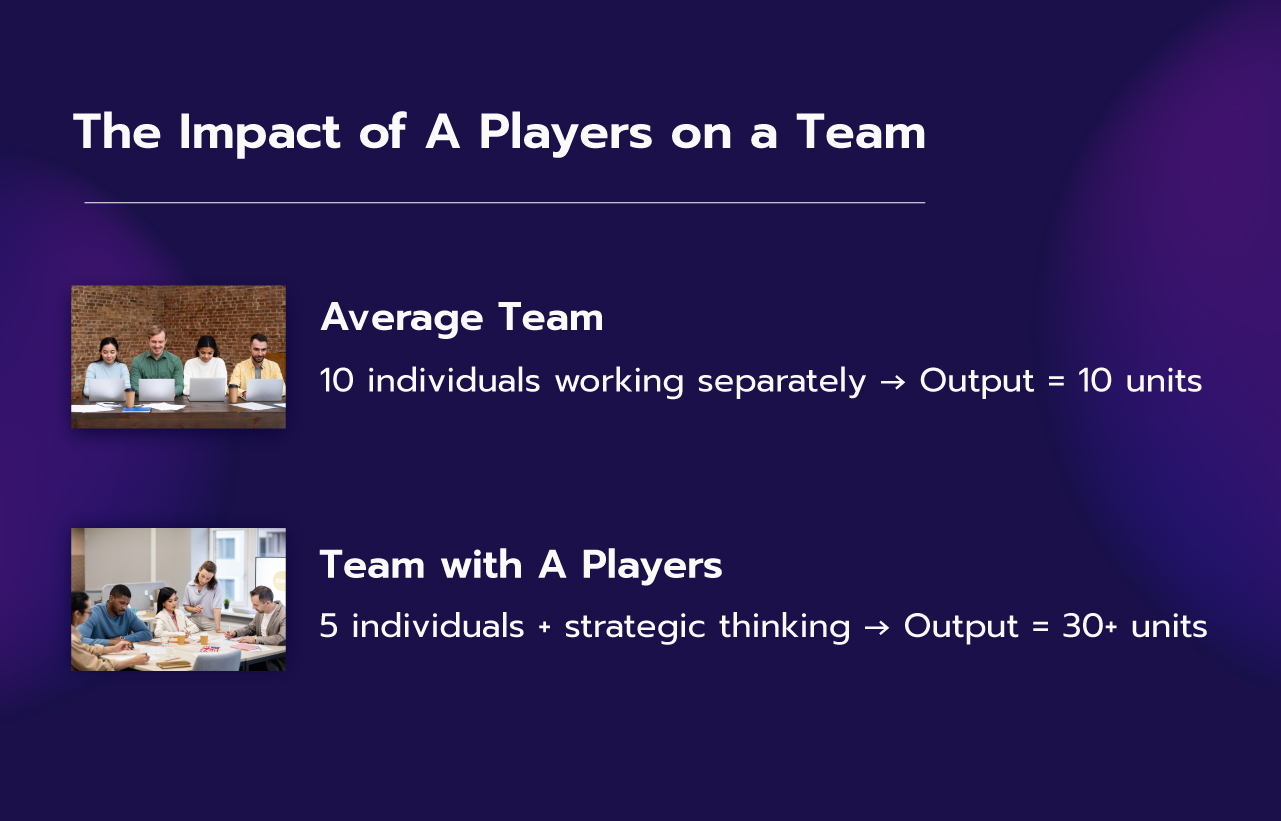
I have seen teams full of incredibly talented people who could not move the business forward. Everyone was excellent at their own job, but nobody was thinking about how their work connected to the bigger strategy. The result? A collection of individual performers who never became a real team.
On the other hand, I have seen small teams of players outperform groups twice their size. Because when everyone thinks strategically, the multiplier effect is unreal. One good idea leads to another. One person's insight unlocks a breakthrough for someone else.
How to spot a player
You cannot always tell from a resume. But there are signs.
Players ask "why" more than "what." When you give them a task, they want to understand the context. Not because they are being difficult, but because they know that understanding the purpose leads to better execution.
Players bring up things you did not ask about. They notice patterns. They come to you with observations like, "I was looking at our onboarding flow and I think we are losing people at step three." Nobody asked them to look at the onboarding flow. They just did.
Players take ownership beyond their role. If something falls through the cracks, they pick it up. Not because it is their responsibility, but because it needs to get done and they care enough to do it.
And maybe most importantly - players think about the business the way a founder thinks about it. They worry about revenue, customer satisfaction, team morale, and long-term sustainability. Even if their title says "analyst" or "coordinator."
Play the long game with serious people
Here is my honest advice to anyone building or running a business.
Find your players. Invest in them. Give them room to grow and the trust to make decisions. Build your core team around them, and let everything else follow.
This does not mean you fire everyone who is not a player. Every team needs people who are great at execution, who are reliable, who do their job well. Those people matter too.
But when it comes to the people who shape your strategy, who influence your direction, who sit at the table when big decisions are made - make sure those seats are filled with players.
Because the long game is not about having the most people. It is about having the right people.
One more thing
Players recognize other players. When you build a culture that attracts this kind of thinking, it becomes self-reinforcing. Players want to work with other players. They push each other. They hold each other accountable. They raise the bar without anyone having to ask.
That is the kind of team that wins. Not just this quarter, but over the long haul.
So the next time you are making a hiring decision, or promoting someone, or deciding who leads your next big project - ask yourself one question.
Is this person a player?
If the answer is yes, bet on them. You will not regret it.