
Something interesting is happening in the tech world right now. And it has nothing to do with learning how to write code.
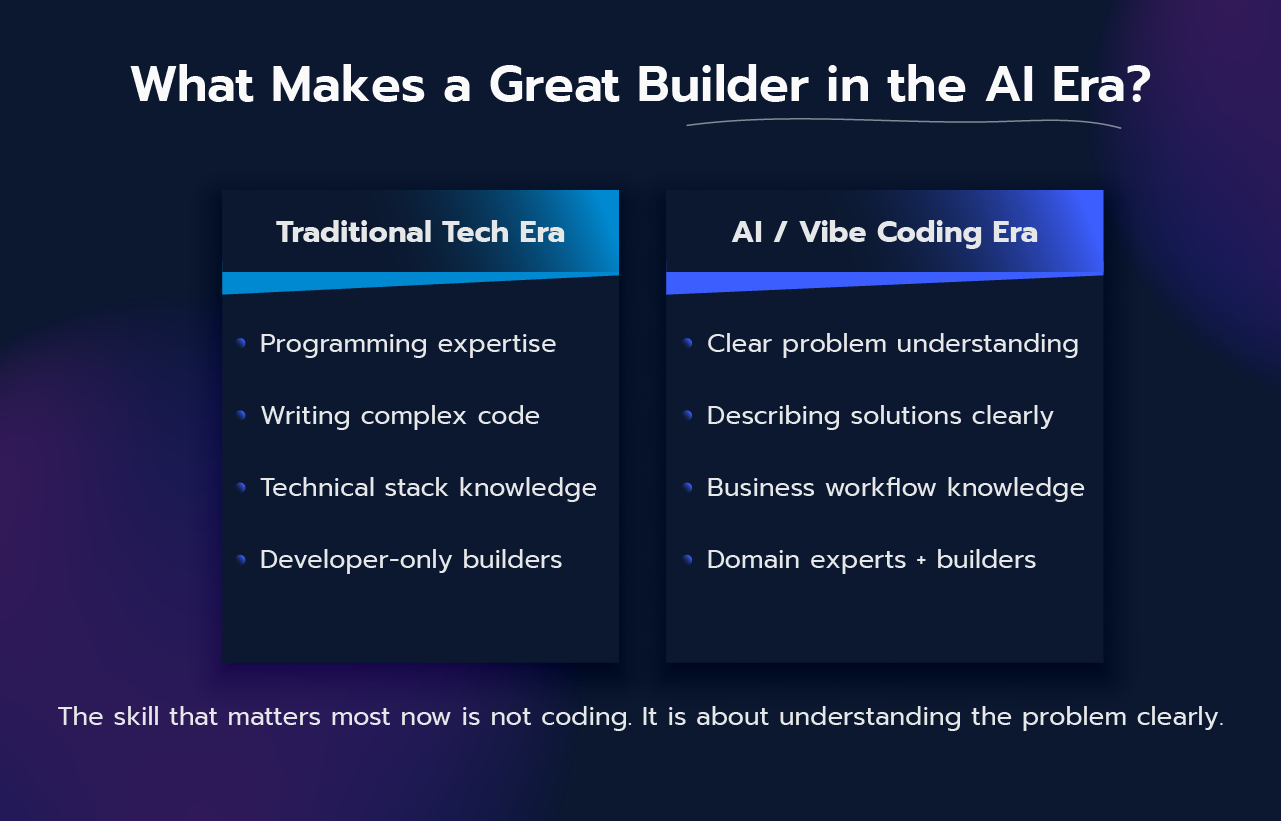
For years, the assumption was simple - if you want to build something digital, you need to be technical. You need to understand programming languages, frameworks, and deployment pipelines. You need to spend months, sometimes years, just getting comfortable with the tools before you can even think about building something useful.
That assumption is dying. Fast.
We are entering the age of vibe coding. If you have not heard of it yet, here is the short version - you describe what you want to build in plain language, and AI helps you write the code. You guide the direction. The machine handles the syntax.
Now, this sounds exciting for everyone. But here is the part most people are missing.
The people who will benefit the most from vibe coding are not the ones with a computer science degree. They are the ones who understand business. The ones who think clearly. The ones who know what problem they are solving and for whom.
Let me explain why.
Clear thinking is the new programming skill
When you sit down with an AI tool to build something, the quality of what you get depends entirely on the quality of what you ask for. If your thinking is fuzzy, your output will be fuzzy. If you do not understand the problem well enough, the solution will be half-baked no matter how smart the tool is.
But if you know the business inside out - if you understand the customer pain points, the workflow bottlenecks, the gaps in existing solutions - you can describe exactly what needs to be built. And that description becomes the blueprint.
This is a massive shift. For the first time, the person closest to the problem can also be the person who builds the solution.
The builder gap is closing
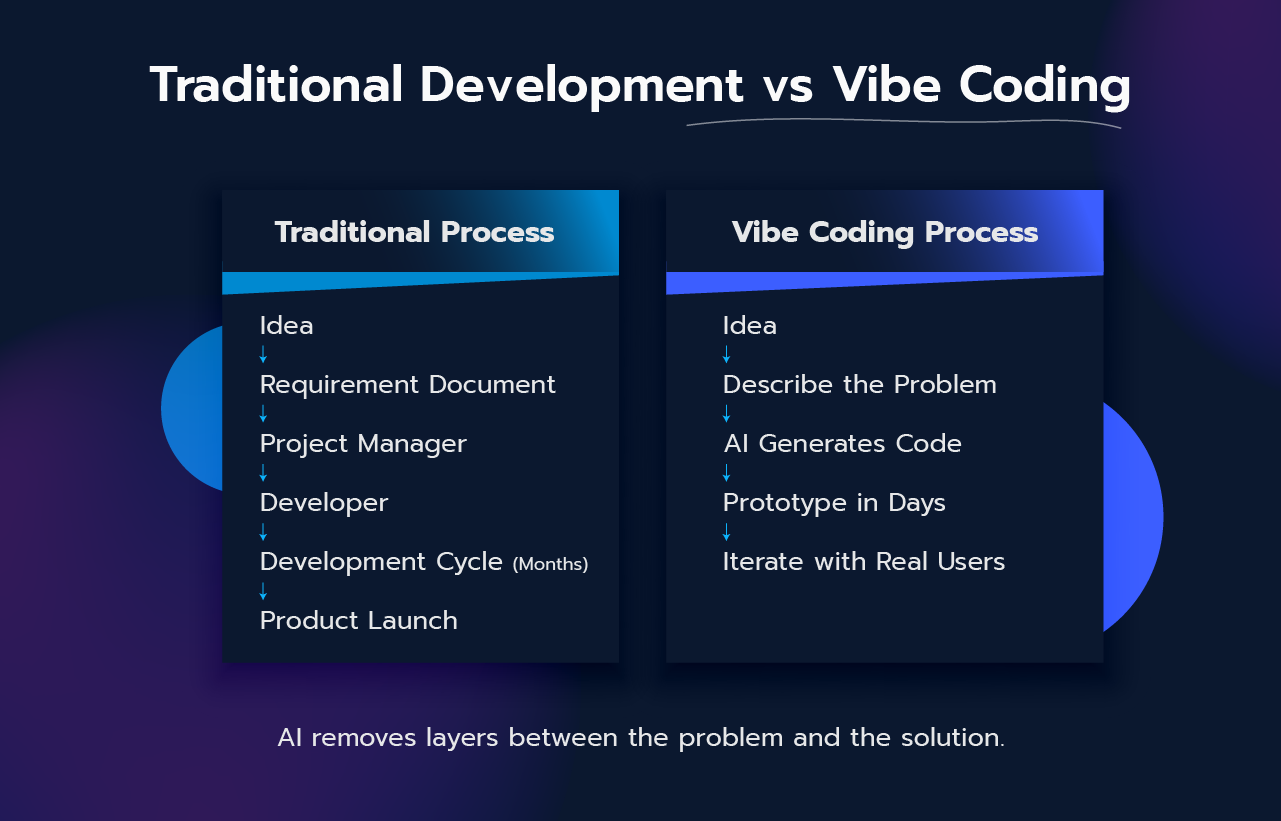
Think about how things have worked until now. A business person sees a problem. They write a document about it. They hand it to a project manager. The project manager translates it for a developer. The developer builds something based on their interpretation. Three layers of translation later, the final product barely resembles the original idea.
Vibe coding cuts through all of that.
The person with the idea can now sit down, describe the solution in clear terms, and start building. No translation layers. No months of back and forth. No waiting for budget approvals just to test a concept.
This does not mean developers become irrelevant. Far from it. Complex systems, security, performance optimization - these still need deep technical expertise. But for a huge category of business tools, internal dashboards, workflow automations, and customer-facing micro products, the game has changed completely.
Speed is the real advantage
Here is what excites me the most. The people who think clearly and understand business are going to move faster than ever before.
Imagine someone who has spent fifteen years in supply chain management. They know every pain point, every inefficiency, every workaround their team uses daily. With vibe coding, that person can prototype a solution in days instead of waiting months for IT to prioritize their request.
Or think about a sales manager who understands exactly what data their team needs to close deals faster. Instead of requesting a report from the analytics team and waiting two weeks, they can build a simple dashboard themselves.
The speed advantage is not just about saving time. It is about capturing opportunities that would have disappeared by the time a traditional development cycle was complete.
What this means going forward
The next wave of builders will not look like the stereotypical tech founder. They will be people with domain expertise, real-world experience, and the ability to think through problems from start to finish.
They will be the operations manager who builds an internal tool that saves their company thousands of hours. The consultant who creates a simple product based on patterns they have seen across dozens of clients. The small business owner who automates their invoicing without hiring a developer.
These people always had the ideas. Now they have the tools.
The one thing that does not change
There is a catch, though. And it is an important one.
Vibe coding makes execution easier. It does not make thinking easier. You still need to understand the problem deeply. You still need to know who you are building for and why. You still need to make decisions about what to include and what to leave out.
The tools have changed. The fundamentals have not.
If anything, clear thinking becomes more valuable in this new world, not less. Because when everyone has access to the same building tools, the differentiator is no longer who can code - it is who can think.
The future belongs to clear thinkers who understand real problems. Vibe coding is just the vehicle that gets them there faster.
And honestly, that is the most exciting shift in tech I have seen in a long time.