
Imagine walking into a store on a hot summer day. You head straight for the cooler, and without thinking, your hand reaches for a familiar red label, Coca-Cola. It’s a brand you’ve known for years, maybe even decades. But what you don’t see is the invisible network of smart technologies working behind the scenes to make that moment possible.
From anticipating your preferences to reducing its environmental footprint, Coca-Cola is blending its rich legacy with the power of artificial intelligence. This isn’t just a story about a beverage; it’s about how one of the world’s most iconic brands is using AI to connect with consumers in smarter, more sustainable ways.
Get ready to see how AI is adding an extra fizz to your Coca-Cola experience!
Coca-Cola's Approach to AI
Coca-Cola, known for its innovation, has evolved into a global brand that embraces technology to stay ahead. As consumer preferences shift and competition grows, the company leverages artificial intelligence to enhance customer experiences, streamline operations, and drive sustainability.
Central to its AI strategy is gaining deeper insights into consumer behavior. By using data analytics and AI, Coca-Cola predicts trends, customizes marketing, and refines products, keeping it aligned with evolving demands.
To strengthen its AI efforts, Coca-Cola partners with tech giants like Microsoft and Salesforce, integrating advanced analytics and cloud tools to improve decision-making. It also collaborates with AI-focused startups, encouraging fresh ideas and accelerating innovation in the beverage industry. These efforts highlight Coca-Cola’s vision of a future where AI powers smarter strategies and cutting-edge products. Through its initiatives, the company isn’t just adapting to change, it's shaping it.
Applications of AI at Coca-Cola
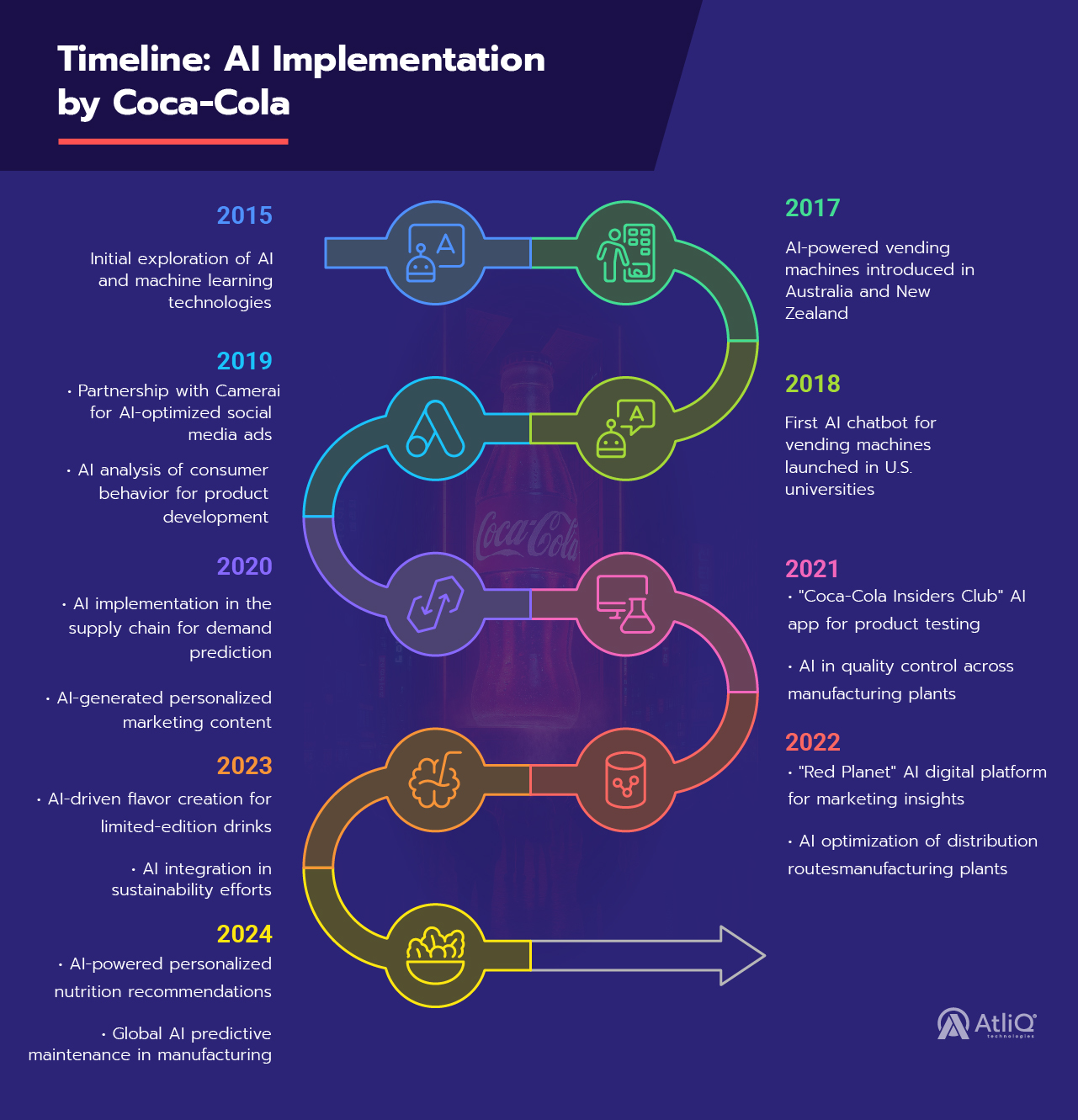
Coca-Cola’s integration of artificial intelligence (AI) spans various aspects of its operations, enhancing marketing efforts, optimizing supply chains, driving product development, and elevating customer experiences. Here’s a closer look at how AI is being applied across these critical areas:
Marketing and Customer Engagement
In today’s fast-paced market, personalized marketing has become essential for connecting with consumers. Coca-Cola utilizes AI to enhance targeted advertising and customer engagement strategies, ensuring that its marketing efforts resonate with diverse audiences.
-
Targeted Advertising and Personalization: Through AI-powered analytics, Coca-Cola analyzes vast amounts of customer data to identify patterns and preferences. This enables the company to deliver personalized advertisements tailored to individual consumers, increasing engagement and conversion rates. For instance, AI algorithms can predict which promotions will appeal to specific demographics, allowing for more effective ad placements across various channels.
-
Tailored Marketing Campaigns: By leveraging machine learning models, Coca-Cola can analyze consumer interactions and feedback in real-time. This insight allows the company to adjust marketing campaigns dynamically, ensuring they align with current trends and consumer sentiments. For example, AI tools can assess social media reactions to advertisements and guide creative adjustments or repositioning strategies.
-
AI-Driven Marketing Initiatives: One standout example is Coca-Cola’s use of AI-generated advertisements. In collaboration with tech partners, the company has developed automated systems capable of creating ad content based on audience analysis. This innovation streamlines the creative process and enables faster deployment of campaigns that resonate with target audiences, maximizing impact and reach.
Supply Chain Optimization
Coca-Cola’s supply chain is a complex network that requires precise management to meet global demand efficiently. AI plays a vital role in enhancing this system.
-
Inventory Management and Demand Forecasting: By employing AI algorithms, Coca-Cola can predict inventory needs based on historical data, seasonal trends, and market conditions. This predictive capability allows for optimized stock levels, reducing waste and ensuring product availability across all distribution channels.
-
Efficiency in Production and Distribution: AI solutions streamline operations by improving production scheduling and distribution logistics. For instance, machine learning models analyze supply chain data to identify bottlenecks and recommend adjustments, leading to enhanced efficiency. This proactive approach minimizes delays and maximizes resource utilization.
Case Study: A notable example of Coca-Cola’s AI-driven supply chain initiative is its partnership with the AI startup, Dextro. By implementing Dextro’s AI solutions, Coca-Cola improved its demand forecasting accuracy by 30%. This significant enhancement enabled the company to align production with actual consumer demand more closely, reducing excess inventory and ensuring timely product availability.
Product Development
Coca-Cola is constantly innovating its product lineup, and AI is integral to understanding consumer preferences and trends.
-
Analyzing Consumer Trends and Preferences: By utilizing AI analytics, Coca-Cola can assess consumer feedback, sales data, and market research to identify emerging trends. This insight allows the company to stay ahead of market demands and create products that resonate with consumers.
-
Creating New Flavors and Beverage Innovations: AI also assists in the creative process of product development. By analyzing flavor combinations and consumer feedback, AI tools help Coca-Cola experiment with new beverage recipes that align with current taste preferences. This approach allows for faster innovation cycles and ensures that new products are aligned with consumer expectations.
Example of a Product Launch: A prime example is the launch of Coca-Cola's "Coca-Cola Energy," a product developed with AI insights into consumer demand for energy drinks. By analyzing market trends and customer preferences, Coca-Cola was able to create a product that blended the brand’s classic taste with energy-boosting ingredients, effectively tapping into a new segment of the beverage market.
Customer Experience Enhancement
Enhancing customer experience is a top priority for Coca-Cola, and AI plays a crucial role in creating seamless and engaging interactions.
-
AI Chatbots for Customer Service: Coca-Cola has implemented AI-powered chatbots to handle customer inquiries efficiently. These chatbots are designed to provide instant responses to common questions, guide consumers through the purchasing process, and offer personalized recommendations based on previous interactions. This AI-driven customer service approach ensures that consumers receive timely assistance and enhances overall satisfaction.
-
AI in Vending Machines and Smart Dispensers: The introduction of AI technology in Coca-Cola’s vending machines and smart dispensers represents a significant leap in consumer interaction. These machines can analyze user preferences and purchase histories, allowing them to suggest products tailored to individual tastes. This personalization not only enhances the customer experience but also encourages higher sales through targeted recommendations.
Examples of AI Applications in Consumer Interactions: Coca-Cola’s collaboration with the AI company, Tactile, resulted in smart vending machines that can recognize returning customers through mobile app integration. This recognition enables the machines to suggest their favorite beverages, thus personalizing the purchasing experience. Such innovative applications of AI contribute to building brand loyalty and fostering deeper connections with consumers.
Coca-Cola's multifaceted approach to AI demonstrates the company's commitment to innovation and customer-centricity. By harnessing AI across marketing, supply chain management, product development, and customer engagement, Coca-Cola is not only enhancing its operational efficiency but also ensuring that it meets the evolving needs and preferences of consumers around the world.
The Impact of AI on Coca-Cola's Business
The integration of AI at Coca-Cola has yielded significant measurable outcomes, positively influencing various aspects of the company's operations. From driving sales growth to enhancing operational efficiency, AI is proving to be a game changer in the beverage industry. Furthermore, Coca-Cola is leveraging AI to align with its sustainability goals, showcasing the dual benefits of innovation and environmental responsibility.
Measurable Outcomes from AI Integration
-
Sales Growth: Coca-Cola has experienced notable increases in sales due to its AI-driven marketing strategies. By utilizing advanced data analytics to personalize advertising and target specific demographics, the company has improved customer engagement and conversion rates. For instance, AI-generated advertisements have allowed Coca-Cola to deploy campaigns that resonate with audiences, resulting in a measurable uplift in sales figures. Reports indicate that targeted marketing efforts have led to a double-digit percentage increase in brand engagement.
-
Operational Efficiency: AI has significantly enhanced Coca-Cola's operational efficiency across its supply chain. The implementation of AI for demand forecasting has led to improved inventory management, reducing excess stock and minimizing waste. By analyzing historical sales data and market trends, AI algorithms provide accurate predictions for product demand, which has helped Coca-Cola streamline production and distribution processes. This optimization has not only lowered operational costs but has also ensured that products are readily available to meet consumer demand.
-
Cost Savings: Through AI-driven automation and improved supply chain logistics, Coca-Cola has achieved substantial cost savings. The predictive capabilities of AI enable the company to reduce production costs and improve resource allocation, ultimately contributing to a healthier bottom line.
Contribution to Sustainability Goals
Coca-Cola has long prioritized sustainability, and AI is playing a crucial role in advancing these initiatives. The company aims to reduce its environmental footprint and enhance resource efficiency through various AI applications:
-
Resource Optimization: AI technologies help Coca-Cola optimize water usage, energy consumption, and raw material sourcing in its manufacturing processes. By analyzing production data, AI systems can identify areas for improvement and suggest adjustments that lead to more sustainable practices. For example, AI can help optimize energy usage in production facilities, reducing overall energy consumption and lowering greenhouse gas emissions.
-
Waste Reduction: AI's predictive capabilities allow Coca-Cola to minimize waste across its supply chain. By accurately forecasting demand and optimizing inventory levels, the company can reduce overproduction and, consequently, waste. This efficiency not only supports Coca-Cola's sustainability goals but also enhances its reputation as a responsible corporate citizen.
-
Sustainable Product Development: Coca-Cola employs AI to analyze consumer preferences and trends related to sustainability. This insight enables the company to develop new products that align with environmentally conscious consumer demands, such as beverages with lower sugar content or packaging made from recycled materials.
-
Carbon Footprint Tracking: AI tools enable Coca-Cola to monitor and analyze its carbon footprint more effectively. By leveraging data analytics, the company can track emissions across its operations and supply chain, identifying opportunities for improvement and ensuring compliance with sustainability targets.
In summary, the impact of AI on Coca-Cola's business is profound, with measurable outcomes demonstrating significant sales growth and enhanced operational efficiency. Additionally, AI's role in supporting the company's sustainability initiatives showcases Coca-Cola's commitment to responsible business practices and its dedication to minimizing its environmental impact. As Coca-Cola continues to innovate and evolve, AI will undoubtedly remain a cornerstone of its strategy for future success.
Challenges and Considerations
-
Data Privacy & Security: Complying with regulations and safeguarding consumer data.
-
Legacy System Integration: Merging AI with existing tech infrastructure.
-
Skill Gaps & Training: Upskilling employees to effectively use AI.
-
Change Management: Managing cultural shifts and employee adoption.
-
Bias & Fairness: Reducing algorithm bias for fair outcomes.
-
Tech Dependence: Balancing AI use with human judgment.a
-
Cost & ROI: Managing costs and measuring return on investment.
-
Fast Tech Evolution: Keeping up with rapid AI advancements.
-
Ethics: Ensuring AI aligns with ethical and corporate values.
Coca-Cola's journey into the world of artificial intelligence illustrates a compelling narrative of innovation and transformation in the beverage industry. By leveraging AI across various facets of its operations—ranging from marketing and supply chain optimization to product development and customer engagement—the company has not only achieved measurable growth but also enhanced its efficiency and sustainability initiatives.
The measurable outcomes of AI integration, including increased sales and improved operational efficiency, underscore the strategic importance of technology in Coca-Cola's business model. Moreover, the commitment to sustainability and environmental responsibility reflects a forward-thinking approach that aligns with evolving consumer expectations.
However, as Coca-Cola continues to navigate the complexities of AI implementation, it must remain vigilant in addressing the associated challenges. From data privacy concerns to workforce training and ethical considerations, proactive measures will be essential for maximizing the benefits of AI while minimizing risks.