
AI is no longer a futuristic concept—it’s the driving force behind smarter businesses, automated workflows, and groundbreaking innovations. Companies know they need AI, but here’s the catch: They don’t know where to start.
That’s where AI consulting firms step in. Whether it’s optimizing supply chains, automating customer service, or extracting insights from mountains of data, businesses are actively seeking experts who can bridge the gap between AI’s potential and its real-world impact.
But building an AI consulting firm isn’t just about knowing AI—it’s about educating clients, proving ROI, and delivering solutions that work. At AtliQ Technologies, we didn’t just read about building an AI consulting firm—we built one ourselves. We’ve navigated the challenges, learned from mistakes, and fine-tuned our approach to delivering real AI solutions that businesses need. What sets great AI consulting firms apart is their ability to educate clients, challenge assumptions, and drive real business value.
If you're thinking about launching your own AI consulting firm, you're in the right place. This guide isn’t just theory—it’s packed with hard-earned insights, practical strategies, and the exact steps to build a thriving AI consultancy.
The Rise of AI Consulting
Artificial Intelligence is transforming industries at an unprecedented pace, from automating business processes to enabling data-driven decision-making. However, despite the enthusiasm about AI, many businesses struggle to implement it effectively. They lack the technical expertise, strategic direction, and resources needed to build AI solutions in-house. This is where AI consulting firms step in.
The Growing Demand for AI Expertise
Businesses across industries—healthcare, finance, retail, manufacturing, and more—are realizing that AI can enhance efficiency, cut costs, and unlock new revenue streams. Yet, most organizations face challenges like:
-
Lack of in-house AI expertise to develop and deploy models.
-
Complex data infrastructure that requires specialized handling.
-
Uncertainty about ROI, making AI adoption seem risky.
-
Fast-changing AI advancements make it hard to stay updated.
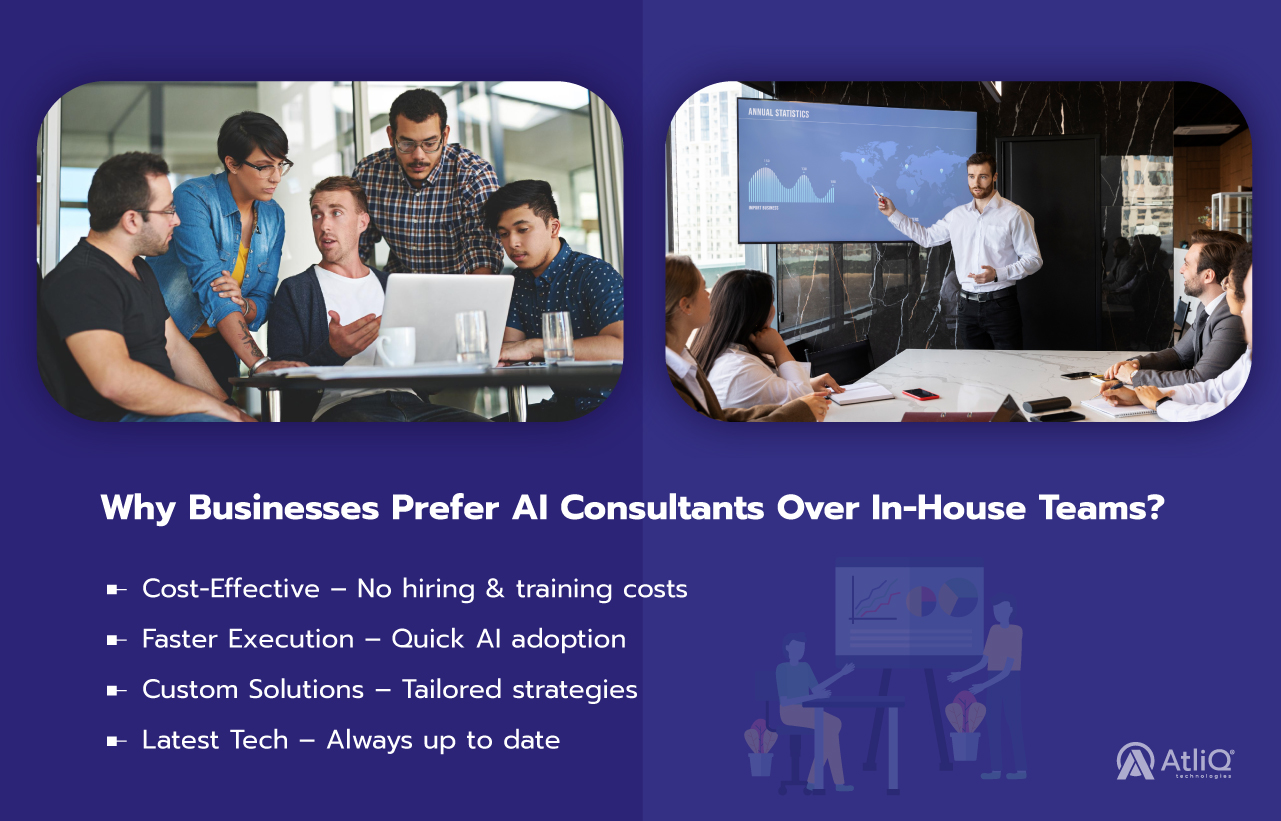
To bridge these gaps, companies are increasingly relying on AI consultants who bring technical know-how and business strategy to the table.
What Are AI Consultants Selling?
AI consulting is not just about coding AI models—it’s about guiding businesses in AI adoption, governance, and execution. The key services offered by AI consultants include:
-
General Advisory – Helping businesses understand AI’s potential, feasibility, and use cases specific to their industry.
-
Governance – Ensuring AI is implemented ethically, securely, and in compliance with regulations (GDPR, HIPAA, etc.).
-
Prototyping & Implementation – Developing small-scale AI prototypes to test feasibility before full-scale deployment, reducing risk, and optimizing investment.
As AI adoption surges, the role of AI consultants is becoming indispensable. This guide will take you through the step-by-step process of building a successful AI consulting firm—from defining your niche to acquiring clients and scaling your business.
Defining Your Niche: Specialization is Key
AI is a vast and rapidly evolving field, and no AI consulting firm can master every aspect of it. To stand out in the competitive landscape, specialization is key. Choosing a niche allows you to develop deep expertise, attract the right clients, and deliver high-value solutions that solve industry-specific problems.
Understanding AI’s Broad Spectrum
AI consulting spans multiple domains, each with unique challenges and opportunities. Some of the most in-demand AI areas include:
-
Machine Learning & Deep Learning – Building predictive models, recommendation engines, and advanced neural networks for various industries.
-
Natural Language Processing (NLP) – Powering chatbots, sentiment analysis, automated translations, and AI-driven content creation.
-
AI-driven Automation & RPA – Streamlining workflows with robotic process automation (RPA) and AI-powered decision-making.
-
AI in Cybersecurity – Threat detection, fraud prevention, and security automation to protect businesses from cyber risks.
-
Industry-Specific AI – AI solutions tailored for:
-
Finance (risk modeling, fraud detection, trading algorithms)
-
Healthcare (diagnostics, patient data analysis, drug discovery)
-
Retail (personalized shopping, inventory forecasting, customer behavior analysis)
-
Manufacturing (predictive maintenance, quality control, supply chain optimization)
How to Choose Your Niche?
To determine the right AI consulting niche, consider the following:
-
Expertise – What AI domains do you or your team specialize in? Prior experience in a field gives you an edge.
-
Market Demand – Which industries are actively adopting AI? Research trends, funding, and business needs in different sectors.
-
Competitive Advantage – What unique value can you offer that existing consulting firms don’t? Focus on ROI-driven, practical AI implementations.
-
Prototyping is the Key – Never build AI just for the sake of it. Instead of jumping into large-scale AI projects, start small.
-
Develop a minimum viable AI solution to validate its impact.
-
Identify quick wins that deliver measurable value early on.
-
Fail fast, learn fast—Refining or pivoting based on early results ensures smarter investments.
By choosing the right AI consulting niche and focusing on high-impact, tested AI solutions, you position your consulting firm as a trusted expert—not just another AI service provider.
Essential Skills & Team Composition
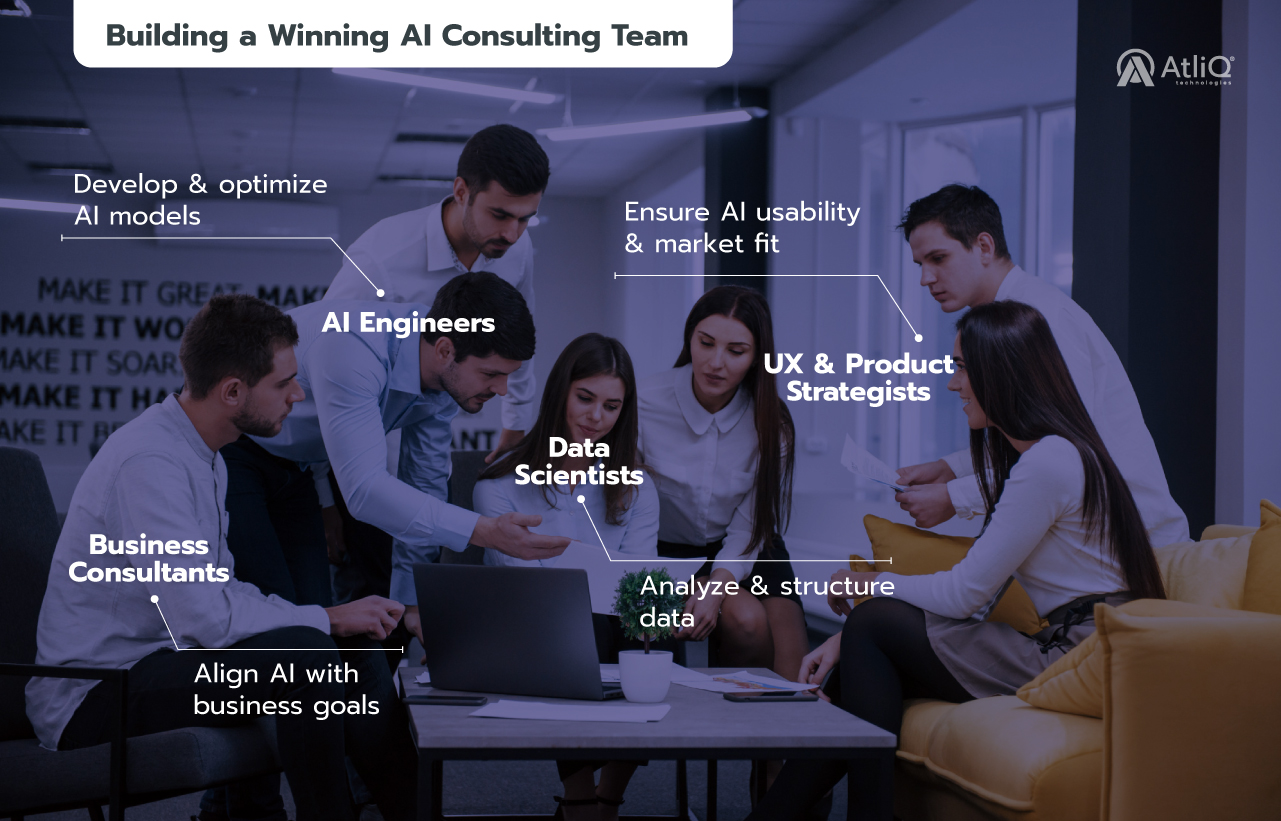
Building a successful AI consulting firm requires a well-rounded team with a mix of technical, business, and soft skills. While AI expertise is crucial, consulting is not just about technology—it’s about solving business problems and educating clients on the real impact of AI.
Technical Skills: The Core of AI Consulting
Your team should have strong technical expertise to develop, implement, and optimize AI solutions. Key areas include:
-
-
AI & Machine Learning Algorithms – Understanding deep learning, neural networks, and predictive modeling.
-
Data Engineering – Structuring and managing large datasets for AI applications.
-
Cloud Computing & AI Infrastructure – Work with AWS, Google Cloud, or Azure to deploy scalable AI solutions.
-
Business Skills: Turning AI into Real-World Impact
AI consulting is about delivering ROI-driven solutions, not just building models. Essential business skills include:
-
-
Consulting Frameworks – Structuring AI strategies aligned with business goals.
-
ROI Analysis – Measuring AI’s financial impact to justify investments.
-
Business Process Automation – Identifying inefficiencies AI can solve for cost savings and efficiency gains.
-
Soft Skills: The Human Side of AI Consulting
Technical knowledge alone isn’t enough. Successful AI consultants must understand client pain points, communicate effectively, and build trust. Key soft skills include:
-
-
Communication – Explaining complex AI concepts in simple, business-friendly language.
-
Problem-Solving – Identifying business challenges and proposing AI-powered solutions.
-
Client Relationship Management – Managing expectations, building long-term partnerships, and ensuring project success.
-
Business Model: How Will You Make Money?
A successful AI consulting firm needs a sustainable and scalable business model. While AI expertise is valuable, turning that knowledge into profitable services requires the right monetization strategies. Below are some of the most effective ways AI consultants generate revenue.
Project-Based Consulting (One-time engagements, high-value projects):
Many businesses seek AI consulting for specific challenges, such as automating processes, optimizing workflows, or developing AI-driven insights. These projects typically involve:
-
-
AI strategy development
-
Proof of Concept (PoC) and prototyping
-
Implementation & deployment of AI models
-
Revenue Model: Charge per project based on complexity, duration, and impact.
Subscription-Based AI Advisory (Ongoing consulting for continuous AI support):
Some businesses need long-term AI guidance, especially as AI models evolve and require maintenance. A retainer-based or subscription model works well for:
-
-
AI strategy consulting & optimization
-
Continuous monitoring & improvement of AI models
-
Regular data analysis & insights
-
Revenue Model: Monthly or yearly subscription fees for advisory services.
Custom AI Solutions & Integrations (Building tailor-made AI applications):
Many businesses require AI solutions customized to their specific industry needs. These can include:
-
-
AI-driven automation for operations
-
AI-powered customer support (chatbots, virtual assistants)
-
Predictive analytics for decision-making
-
Revenue Model: Charge for development, implementation, and ongoing maintenance.
AI Training & Workshops (Educating businesses on AI adoption):
Since AI education is crucial, many businesses seek workshops & training sessions to upskill their teams. AI consultants can offer:
-
-
AI literacy training for executives & employees
-
Hands-on AI development workshops
-
Industry-specific AI best practices
-
Revenue Model: Charge per session, per participant, or offer corporate training packages.
White-Label AI Services (Providing AI solutions under another company’s brand):
Some businesses want AI-powered solutions but lack in-house expertise. AI consulting firms can offer white-label services, allowing other companies to sell AI solutions under their brand. This is especially useful for:
-
-
SaaS companies looking to integrate AI
-
Marketing firms wanting AI-driven insights
-
E-commerce platforms needing AI-powered personalization
-
Revenue Model: Charge licensing fees or revenue-sharing on AI-powered products.
ROI is the Key: Keep It Simple, Keep It Effective
Regardless of the business model, one rule applies: AI should deliver measurable ROI. Clients don’t care about complex algorithms—they care about results. The most successful AI consultants:
-
Focus on quick wins to gain client trust.
-
Prioritize practical AI solutions over hype.
-
Ensure that AI implementations directly impact revenue, cost savings, or efficiency.
By choosing the right revenue model and focusing on AI solutions that drive real business value, your AI consulting firm can achieve long-term success and profitability.
Acquiring Clients: Marketing & Lead Generation Strategies For AI Consulting Firms
Building an AI consulting firm is not just about technical expertise—it’s about attracting the right clients and proving your value in a competitive market. To succeed, you need a strong marketing strategy that establishes credibility, educates potential clients, and differentiates your services from generic AI solutions.
Build Your Credibility (Become the go-to AI expert):
AI consulting is a trust-based business—clients want proof that you can deliver results. Establishing yourself as an authority in the AI space will make it easier to attract high-value clients.
-
Thought Leadership – Regularly publish insightful content on LinkedIn, Medium, or industry blogs showcasing your expertise in AI consulting.
-
Case Studies & Testimonials – Share success stories highlighting how your AI strategies improved efficiency, reduced costs, or boosted revenue for clients.
-
Speaking Engagements – Attend AI conferences, panel discussions, and webinars to network and position yourself as an industry leader.
Educate Your Clients (AI adoption starts with understanding):
Many businesses are interested in AI but unsure how to implement it effectively. By educating potential clients, you position yourself as the expert they trust to guide them.
-
Host Webinars & Workshops – Explain AI trends, industry use cases, and best practices in practical, non-technical terms.
-
Offer Free AI Audits – Provide initial strategy sessions to help businesses identify opportunities for AI implementation.
-
Publish Whitepapers & Guides – Simplify AI adoption by creating downloadable resources that break down complex AI concepts into actionable insights.
Clients Use ChatGPT a Lot—How Do You Differentiate?:
With the rise of generative AI tools, businesses often assume they can get AI insights for free—so why should they hire a consultant? The answer lies in human expertise, strategic thinking, and tailored solutions.
-
Provide Context & Customization – AI tools like ChatGPT offer generic answers, but businesses need strategic, industry-specific AI solutions tailored to their unique challenges.
-
Go Beyond Validation—Challenge Ideas – Instead of simply agreeing with client assumptions, play the devil’s advocate and ask:
-
Do they really need AI?
-
What’s the actual business problem AI is solving?
-
Are they investing in AI for the right reasons?
Focus on Strategy, Not Just Insights – AI consultants don’t just provide answers; they develop frameworks, build AI roadmaps, and implement solutions that drive measurable business impact.
Consult-First Approach (Solve problems, don’t sell AI):
AI is not a one-size-fits-all solution. Businesses don’t just need AI—they need the right AI for their specific needs. A consult-first approach ensures that AI is implemented strategically, not blindly.
-
Understand Pain Points First – Before recommending any AI solution, deep dive into the client’s challenges and business objectives.
-
Offer Insights, Not Just Products – Instead of pushing AI solutions, help clients see how AI aligns with their goals and whether it’s the right fit.
-
Challenge Assumptions – Many businesses want AI without fully understanding its impact. Ask tough questions, create doubts, and refine their approach before implementation.
Winning Clients Is About Trust, Not Just Technology
By building credibility, educating clients, and taking a consultative approach, your AI consulting firm will attract the right businesses—those that value strategy, expertise, and long-term impact over hype. The best AI consultants aren’t just tech experts—they are problem-solvers, educators, and trusted advisors.
Implementation Focused on Business Needs
AI is not just about cutting-edge technology—it’s about solving real business problems. The most successful AI consulting firms don’t just build & implement AI models; they ensure that AI aligns with business goals, integrates seamlessly, and delivers measurable value.
AI Should Solve Business Problems (Not Just Be a Trend):
Many companies want AI because it’s "the future," but without a clear business case, AI projects can become costly failures. A results-driven AI strategy should:
-
Align AI with Tangible Business Goals – Every AI implementation should directly impact cost reduction, efficiency, revenue growth, or customer experience.
-
Tailor AI Models to Industry Needs – Avoid one-size-fits-all AI; solutions should be customized for healthcare, finance, retail, manufacturing, and other industries.
-
Ensure Seamless Integration – AI must work within existing workflows, tools, and business processes to maximize adoption and success.
Data Readiness & Infrastructure (AI is Only as Good as the Data Behind It):
One of the biggest challenges in AI implementation is data quality. Many businesses rush into AI without ensuring that their data is structured, secure, and reliable. AI consultants must:
-
Educate Clients on Data Collection & Quality – Teach businesses how to gather, clean, and structure data for AI-driven insights.
-
Build Scalable AI Solutions – AI should evolve with the business, handling growing datasets and changing market conditions.
-
Provide Ongoing AI Optimization & Maintenance – AI is not a one-time setup; it requires continuous monitoring, updates, and fine-tuning to stay effective.
Prototyping Before Full Implementation (Fail Fast, Learn Fast):
Instead of diving into large-scale AI projects that might not deliver results, the best approach is to test small prototypes first.
-
Start with a Minimum Viable AI Solution (MVAIS) – Develop a small-scale prototype to test feasibility and business impact.
-
Validate Use Cases Before Scaling – Avoid heavy investments in AI until there is proven ROI and a clear path forward.
-
Refine and Iterate – If the prototype fails, learn from it and adjust strategies before committing to full implementation.
AI Implementation Should Be Business-Driven, Not Just Tech-Driven
A well-implemented AI solution doesn’t just "work"—it delivers results. By focusing on business needs, data readiness, and iterative prototyping, AI consultants can ensure faster adoption, higher ROI, and long-term success for their clients.
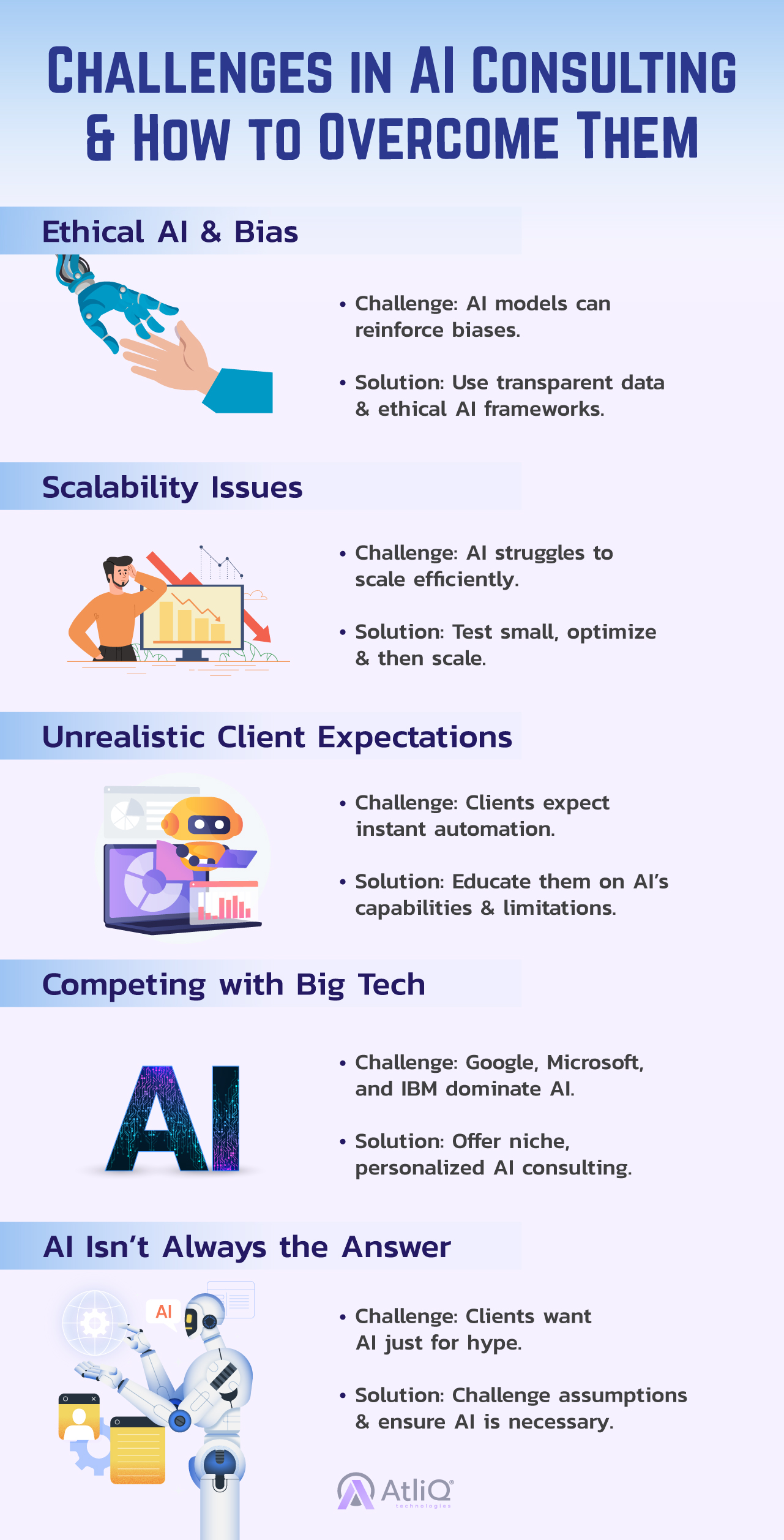
Building a successful AI consulting firm requires more than just technical expertise—it demands strategic thinking, business alignment, and client education. From choosing your niche and structuring a scalable business model to acquiring clients and delivering ROI-driven AI solutions, every step plays a crucial role in establishing your firm as a trusted AI partner.
AtliQ Technologies is a premier AI and data solutions provider, helping businesses unlock the full potential of artificial intelligence. With expertise in AI strategy, custom AI development, and enterprise AI consulting, we specialize in delivering practical, business-focused AI solutions that drive efficiency, growth, and innovation. As AI adoption accelerates across industries, businesses need expert guidance to navigate the complexities of AI implementation. Whether it’s optimizing workflows, automating processes, or enhancing decision-making with data-driven insights, AI consulting firms have a unique opportunity to drive real transformation.
Ready to Build Your AI Consulting Firm? Let’s Connect!